
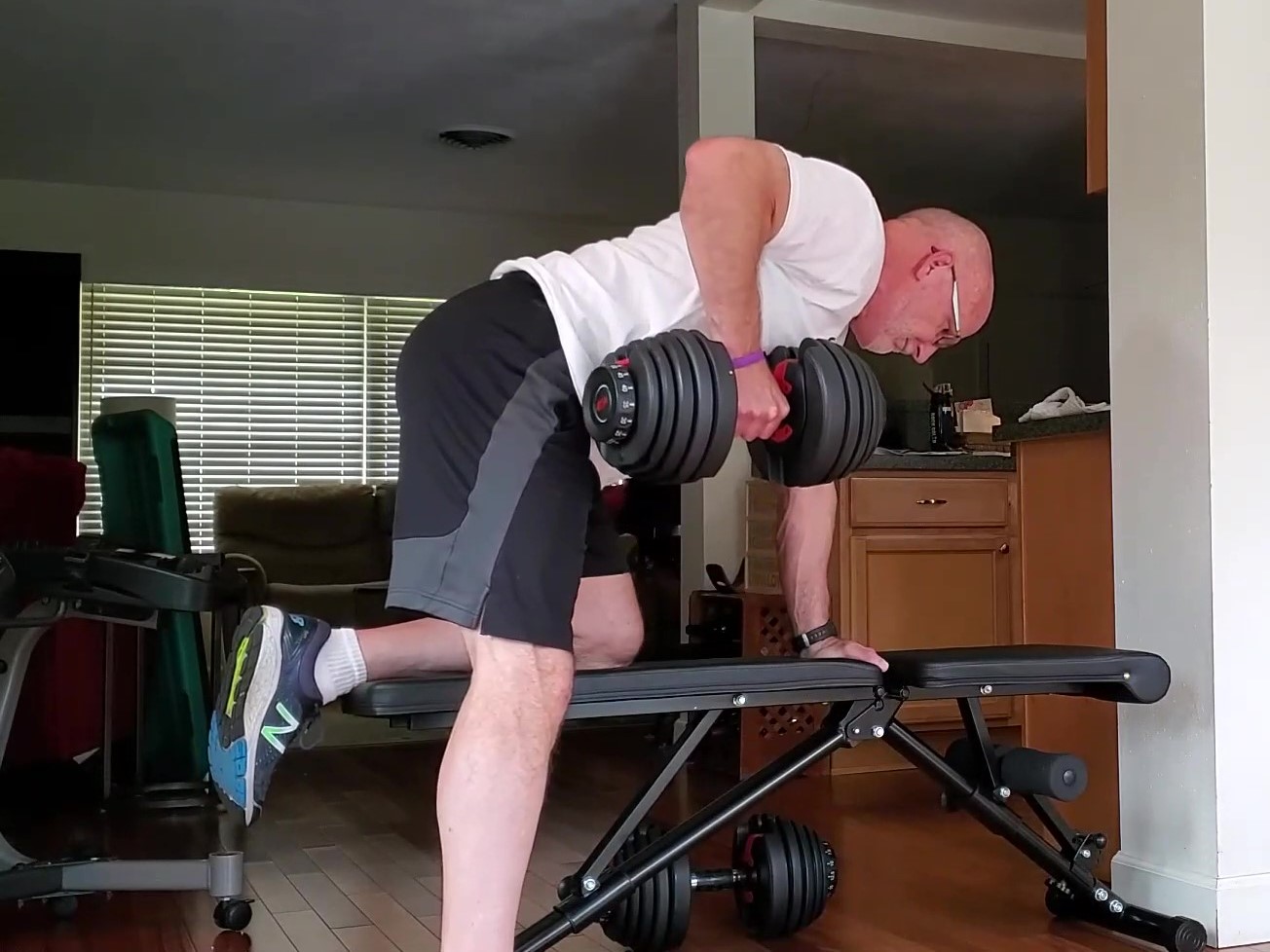
If you’re 60 (or approaching it), you’ve probably asked yourself:
How many days a week should a 60 year old lift weights?
Train too little and you lose muscle, strength, and independence.
Train too much and recovery suffers, joints ache, and progress stalls.
The right answer isn’t extreme. It’s strategic.
For most healthy 60-year-olds, lifting weights no more than 2 days per week is the sweet spot for strength, muscle maintenance, and long-term joint health.
Let’s break down why.
Why Strength Training Matters More Than Ever at 60
Muscle Loss After 60 (Sarcopenia and Its Impact)
After age 50, adults can lose 1–2% of muscle mass per year if they’re inactive. Strength declines even faster than muscle size.
This age-related loss of muscle — often called sarcopenia — isn’t just cosmetic. It affects:
- Balance
- Mobility
- Metabolism
- Joint stability
- Fall risk
The good news? Resistance training is the most powerful intervention we have to slow and even reverse this process.
Strength Training and Longevity
Regular weight training at 60 helps:
- Preserve bone density
- Improve insulin sensitivity
- Reduce fall risk
- Maintain independence
- Support healthy body composition
Organizations like the Centers for Disease Control and Prevention and the World Health Organization recommend muscle-strengthening activities at least twice per week for older adults.
But more is not better when it comes to strength training.
After 60, proper recovery is more critical to success than ever.
So “at least twice” doesn’t mean as much as you can tolerate. That’s the wrong approach.
What we should be asking ourselves after 60 is:
“How little strength training do I require per week for best results?”
And the answer is probably way less than you think.
Why Training Frequency Becomes More Important With Age
At 30, you can often get away with poor programming.
At 60, you can’t.
Your recovery capacity changes:
- Protein synthesis response is slower
- Connective tissues take longer to heal
- Sleep disruptions are more common
- Stress tolerance may be lower
That means training frequency must balance stimulus and recovery.
So, How Many Days a Week Should a 60 Year Old Lift Weights?
The Short Answer: 2 Days Per Week
2 full-body workouts per week works well for most 60-year-olds, especially those new to strength training, or just getting back into it.
Two workouts a week works well because it allows:
- Enough stimulus for muscle maintenance or growth
- Adequate recovery between sessions
- A sustainable long-term routine
For more experienced lifters, once progress stops with twice-a-week workouts, workout frequency needs to be decreased to allow for more recovery.
The Key Principle: Recover as Hard as You Train
The real question isn’t just how often you can train — it’s how often you can recover.
Signs you’re training too frequently:
- Persistent joint soreness
- Decreasing strength
- Poor sleep
- Low motivation
- Lingering fatigue
At 60, progress comes from consistency and recovery, not from grinding yourself down.
How Training Experience Changes the Answer
If You’re New to Lifting at 60
Start with 2 non-consecutive days per week.
Focus on:
- Full-body workouts
- Basic compound movements
- Learning proper technique
- Gradual progression
After 6–8 weeks, many beginners can move comfortably to 3 days per week.
If You’re Returning After Time Off
Be conservative.
Start at 2 days per week, even if you used to train 5.
Rebuild:
- Work capacity
- Joint tolerance
- Neuromuscular coordination
Your past strength is an asset — but your tissues need time to adapt again.
If You’ve Been Lifting for Years
You will eventually need an extra rest day or 2 between workouts.
Options include:
- Training three times every 2 weeks
- Training every 4th day
- Slightly shorter workouts with mostly compound exercises
Even experienced lifters at 60 must respect recovery more than they did at 40.
Full-Body vs. Split Training at 60
Why Full-Body Training Works Best
Full-body workouts 2 times per week:
- Hit all major muscle groups in one workout
- Allow more recovery days
- Leaves more time for other life interests
- Reduce overuse stress on individual joints
For 60-year-olds, this is the most practical and effective setup.
Why an Upper/Lower Split Is Counterproductive
The first thing that must happen after a workout is that hole must get filled in-you have to recover the energy that you used up during the workout.
Once that energy has been replaced, then and only then will your body pile some extra muscle on top of where that hole used to be.
That’s why lifting weights every day is a mistake, even if you are training different parts of your body.
There is an overall energy drain on your body, and eventually you will get burned out.
You should give yourself at least 2 days between strength training workouts, and many people over 60 need more recovery time between workouts.
Recovery: The Real Deciding Factor
How Aging Affects Muscle Recovery
At 60:
- Muscles still grow — but need sufficient protein
- Nervous system recovery may take longer
- Tendons and ligaments adapt more slowly than muscles
This is why moderate frequency works better than daily heavy lifting.
Sleep, Nutrition, and Stress Management
If you’re lifting d2ays per week, prioritize:
- 1.2-1.6 grams of protein per kilogram of bodyweight (general guideline)
- 7–9 hours of sleep
- Regular walking or light movement on off days
- Stress reduction practices
Recovery determines how many days a week a 60 year old should lift weights — not ego.
Warning Signs You’re Lifting Too Many Days
- Elbows, shoulders, or knees ache constantly
- Performance declines week after week
- You feel wired but tired
- Motivation drops
If that’s happening, reduce frequency, not intensity.
Can a 60 Year Old Lift Weights Every Day?
Technically? Yes.
Should they? Never.
For people over 60, daily lifting adds stress without adding results.
More is not better. Better is better.
Common Mistakes 60 Year Olds Make With Training Frequency
Doing Too Much Too Soon
Excitement leads to 5-day routines copied from younger lifters.
Your tissues need progressive exposure.
Copying 30-Year-Old Programs
Those programs assume:
- Faster recovery
- Higher testosterone levels
- More joint resilience
Your program must match your biology.
Not Training Hard Enough
The opposite mistake also happens.
Some 60-year-olds train too lightly out of fear.
Intensity (within safe form) is still necessary to maintain muscle.
Ignoring Individual Recovery Signals
Chronological age matters less than:
- Sleep quality
- Stress load
- Nutrition
- Training history
The Best Weekly Lifting Framework for Most 60 Year Olds
The “Stimulate, Recover, Repeat” Model
- Train with intent
- Recover fully
- Adapt
- Repeat
Two non-consecutive days per week, with 2-3 rest days in between, supports this cycle beautifully.
A Practical Recommendation
If you’re wondering how many days a week a 60 year old should lift weights, start here:
- Begin with 2 days per week
- Train full-body
- Progress gradually
- Adjust based on recovery
If joints ache → reduce frequency
If progress stalls → examine recovery first
If recovery is excellent → progress weight and reps on a regular basis
Adjust Over Time
Your frequency may need to decrease with life changes:
- During stressful periods
- During lower-stress periods
- During travel
Don’t be afraid to add an extra rest day or 2 during stressful periods.
Flexibility ensures sustainability.
FAQ: How Many Days a Week Should a 60 Year Old Lift Weights?
Is lifting weights twice a week enough at 60?
Yes — especially for beginners or those focused on general health. Two well-designed full-body sessions can maintain strength and muscle.
Is three days a week better than two?
No. More is not better when it comes to weight training; harder is better, and the harder you train, the less you can or should train.
Can a 60 year old lift weights four or five days a week?
This is the biggest training mistake you can make. There is an overall drain on the recovery systems in your body, and you will short circuit the recovery process.
How long should each workout be?
Typically 30–45 minutes. Focus on quality sets of compound movements rather than long, exhausting sessions.
Is it safe to lift heavy at 60?
Yes — when progression is gradual and technique is solid. Heavy is relative. Challenging loads help preserve muscle and bone density.
What’s the biggest mistake 60 year olds make with weight training frequency?
Overestimating recovery and underestimating intensity. The sweet spot is moderate frequency with meaningful effort.
Final Takeaway
So, how many days a week should a 60 year old lift weights?
For most:
2 days per week is the sweet spot.
It’s enough to:
- Preserve muscle
- Build strength
- Protect joints
- Support long-term independence
Train consistently. Recover intentionally. Adjust intelligently.
That’s how you stay strong for the next 30 years.
Thoughts or questions on how often a 60 year old should lift weights? Leave a comment below!
Related articles:

6 Comments. Leave new
Hi Dave,
I’m a 68 year old female. I’ve been doing a split routine for three months. When I used to do a full body workout, I felt more fatigued. I feel like I get more bang for the buck by doing a split routine. But I don’t think I’m giving my body enough chance to recover.
I’m going to do two days a week full body a try. My question is how many exercises should I do for the upper and the lower? I do a lot of compound exercises.
Thank you
Hi Laurie, I recommend a total of no more than 8 exercises per workout for all upper and lower body exercises combined. You can divide the exercises up any way you see fit for your personal situation, but I recommend always including a lower body push, lower body flexion, an upper body push, an upper body pull, and something for the midsection.
hey dave great article, i understand 8 exercises but how many sets per exercise? or are you saying
8 and done?
thanks Billy
Thanks Billy, glad you enjoyed the article. I recommend one set per exercise with perfect form and a maximum effort, not including warm ups.
Hi, is doing PPL Monday, Wednesday and Friday a good schedule for gaining muscle, strength and good recovery for a 66 year old man?
Thank you
John
Hi John, that might work ok, but I have found training the whole body as a unit twice a week, and then resting the whole body as a unit, tends to yield better results. There’s a tendency when splitting up the routine into push, pull and leg exercises to add unnecessary exercises to each workout, and there ends up being a lot of overlap, which can interfere with overtraining and a lack of progress.